
Urea
What is urea
Urea or carbamide is an organic compound with the chemical formula CO(NH2)2. It’s a nitrogenous waste product that is formed in the liver and excreted by the kidneys in mammals, including humans. It plays a crucial role in the excretory system by removing excess nitrogen from the body through urine. Additionally, urea is widely used in various industries, including agriculture as a fertilizer, in skincare products as a moisturizer, and the manufacturing of plastics and resins.
History of Urea
The story of urea is a fascinating blend of waste disposal and scientific revolution. Buckle up, because it’s not your typical fertilizer tale.
From Potty to Lab Bench (1773)
The journey begins in a rather unappetizing location – urine. Around 1773, either French chemist Hilaire-Marin Rouelle or Dutch scientist Herman Boerhaave (history can’t quite decide) fished urea out of this liquid waste. Back then, it was a messy business, involving evaporation, filtration, and a whole lot of patience. Think of it as the dark ages of urine chemistry.
Blowing Up Vitalism (1828)
Fast forward to 1828, and enter Friedrich Wöhler, the German chemist with a knack for serendipity. He wasn’t even looking for urea, but while trying to cook up something else entirely (like a scientific alchemist!), he accidentally whipped up urea from scratch – using inorganic ingredients!
This was a scientific bombshell. Back then, a theory called “vitalism” dominated. It claimed organic compounds, the building blocks of life, could only be made by living things, not in some test tube. Wöhler’s unexpected creation of urea in a lab blew that theory wide open. It was a pivotal moment, marking the dawn of modern organic chemistry and proving we can create the very essence of life (well, at least its waste products) without a single living organism involved.
So, the next time you see a bag of urea fertilizer, remember – it’s not just plant food, it’s a reminder of a scientific revolution born from, well, let’s just say unconventional beginnings.
Properties of Urea
Water Solubility
carbamide is highly soluble in water, facilitating its use in aqueous solutions. This property allows for easy incorporation into skincare products, fertilizers, and medical solutions.
Hygroscopicity
carbamide exhibits hygroscopic behavior, meaning it can absorb moisture from the surrounding environment. This property makes it an effective moisturizing agent in skincare products, as it helps to retain water in the skin.
Non-Toxicity
carbamide is generally considered non-toxic, making it safe for many applications. In skincare, it’s well-tolerated by most individuals and is often used in formulations for sensitive skin.
High Nitrogen Content
carbamide contains a high concentration of nitrogen, making it an excellent source of nitrogen for plants when used as a fertilizer. Its nitrogen content contributes to its effectiveness in promoting plant growth and increasing crop yields.
Low Cost
carbamide is relatively inexpensive to produce, making it economically viable for various industrial and agricultural applications. Its affordability contributes to its widespread use in fertilizer production and other industries.
Chemical Reactivity
carbamide can undergo various chemical reactions, including hydrolysis and decomposition under certain conditions. For example, it can react with water to produce ammonia and carbon dioxide, which is utilized in some industrial processes.
Stability
carbamide exhibits stability under normal conditions, with a relatively long shelf life when stored properly. This stability is advantageous for its use in skincare products and other formulations where consistent performance over time is desired.
physical and chemical properties of urea
Physical Properties of Urea:
- Appearance: Colorless to white crystalline solid
- Odor: Odorless
- Density: 1.32 g/cm³ (relatively dense for an organic compound)
- Melting Point: 134°C (273°F)
- Solubility: Highly soluble in water and alcohol, slightly soluble in some organic solvents, insoluble in others (like ethane)
- Hygroscopic: Absorbs moisture from the air
Chemical Properties of Urea:
- Chemical Formula: CO(NH2)2 (contains carbon, nitrogen, oxygen, and hydrogen)
- Molar Mass: 60.06 g/mol
- Weak Base: Exhibits mildly basic properties in water solution
- Non-combustible: Does not readily burn
- Decomposes Before Boiling: When heated to high temperatures, carbamide breaks down before reaching its boiling point
- Hydrogen Bonding: carbamide molecules form hydrogen bonds with each other and with water molecules, influencing their solubility and crystal structure
Various Grades Of Urea
carbamide is available in several grades, each tailored to specific applications and industries. Here are some of the various grades of carbamide
This is the most commonly produced and utilized form of carbamide. It is used primarily as a nitrogen fertilizer in agriculture to provide plants with a readily available source of nitrogen. Fertilizer-grade urea typically has high nitrogen content, usually around 46% nitrogen by weight.
Technical-grade carbamide is used in various industrial applications, such as the manufacturing of resins, adhesives, and plastics. It may have slightly different purity requirements compared to fertilizer-grade carbamide, depending on the specific application.
Feed-grade carbamide is used as a protein supplement in animal feed. It provides a concentrated source of non-protein nitrogen, which can be utilized by ruminant animals, such as cattle, sheep, and goats, to synthesize microbial protein in the rumen.
Pharmaceutical-grade carbamide is produced to meet strict purity standards for use in medical and pharmaceutical applications. It is used in dermatology for its moisturizing properties and is often found in skin care products for conditions like dry skin, eczema, and psoriasis.
Laboratory-grade carbamide is produced with high purity and is used in scientific research and experimentation. It may be used as a reagent in various chemical reactions or as a component in laboratory formulations.
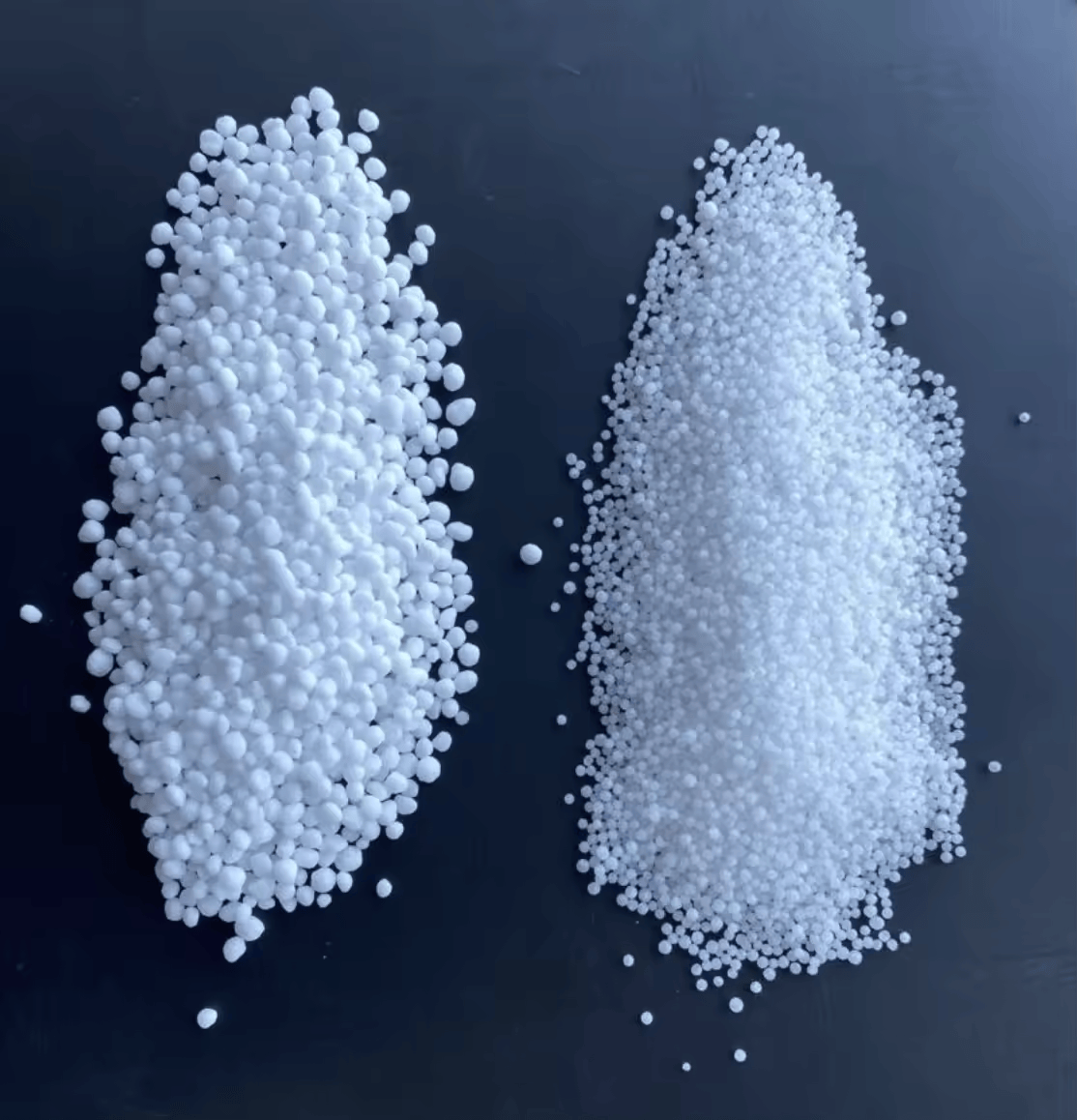
Urea can be produced in different physical forms, such as granules or prills (small spherical pellets). Granular urea is often preferred for agricultural applications due to its slower release of nitrogen, which provides more sustained nutrient availability to plants. Prilled urea, on the other hand, may be preferred for certain industrial applications where rapid dissolution is required.
AdBlue urea is a 32.5% high-purity urea solution used in diesel SCR systems to cut NOx emissions. Injected into the exhaust, it reacts with NOx to form harmless nitrogen gas and water vapor. This helps modern diesel vehicles meet stricter emission standards. While non-toxic and biodegradable, handle AdBlue with care as it can irritate skin and eyes.
Application and uses of urea
Environmental Impact
Urea reduces NOx emissions in diesel vehicles through Selective Catalytic Reduction (SCR) systems, promoting cleaner air and helping meet strict emission regulations.
Agricultural Powerhouse
As a high-nitrogen fertilizer, urea boosts crop growth efficiently and cost-effectively. Proper management ensures optimal plant absorption and prevents soil issues.
Chemical Industry Workhorse
Urea serves as a raw material in plastics, resins, and adhesives, enhancing the strength and durability of products like plywood and particleboard.
Animal Nutrition Contributor
In ruminant feed, urea provides non-protein nitrogen, supporting muscle development and efficient feed utilization when integrated carefully with other nutrients.
Wintertime Ally
Urea acts as an eco-friendly de-icer, preventing ice formation on roads while minimizing harm to surrounding vegetation.
Cosmeceutical Champion
Used in creams, moisturizers, and hair products, urea retains moisture and gently exfoliates, promoting healthy skin and hair.
Urea Packing
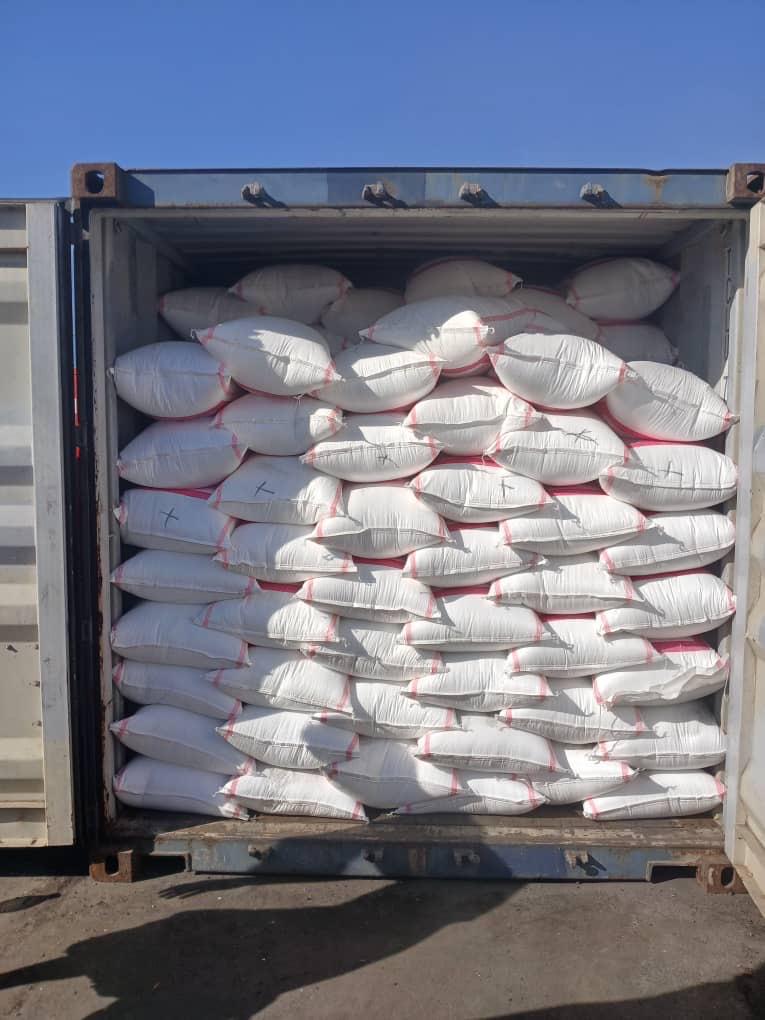
Bulk Bags: For large-scale industrial and agricultural needs.
Sacks and Bags: These are common for smaller applications, like home gardening.
Drums and Containers: Used in specialized industrial processes.
Bulk Shipments: For transporting large quantities via rail, truck, or ship.
Intermediate Bulk Containers (IBCs): Sometimes used for liquid urea.
TECHNICAL DATA SHEET OF PRILLED UREA GRADE (A)
| PROPERTY | UNIT | SPECIFICATION | Result |
|---|---|---|---|
| Nitrogen content | wt% | 46 Min | 46.1 |
| Biuret | wt% | 1.0 | 0.91 |
| Moisture | wt% | 1.0 | 0.20 |
| Physical Condition | – | White, Prilled,Free Flowing | White, Prilled, Free Flowing |
| Particle Size (1-2.84 mm) | % | 90.0 Min | 96.7 |
| Formaldehyde | wt% | Nil | Nil |
| PROPERTY | UNIT | TEST METHOD | SPECIFICATION |
|---|---|---|---|
| Nitrogen content | wt% | ISO-5315 | 46 Min. |
| Moisture | wt% | ISO-2753 | 0.3 Max. |
| Biuret | wt% | ISO-2754 | 1 Max. |
| Particle Size (1-2.84 mm) | % | ISO-8397 | 90 Min. |
| Conditioning Agent | Anti-Cake or Formaldehyde |
| PROPERTY | UNIT | TEST METHOD | SPECIFICATION |
|---|---|---|---|
| Nitrogen content | wt% | ISO-5315 | 46 Min. |
| Moisture | wt% | ISO-2753 | 0.3 Max. |
| Biuret | wt% | ISO-2754 | 1 Max. |
| Particle Size (1-2.84 mm) | % | ISO-8397 | 90 Min. |
| Formaldehyde | wt% | BS 6806-1 | Nil |
| Physical Condition | – | – | White-Prilled-Free Flowing |